
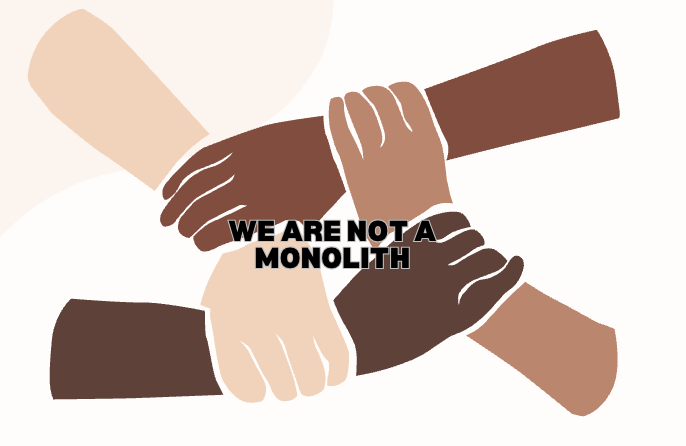
"We Are Not a Monolith, We Are a Multitude" Statement
We invite Latino Christian leaders, pastors, scholars, and practitioners to sign on to ‘We Are Not a Monolith: A Public Statement on Media Representation and the Latino Christian Community.’ This statement underscores the importance of accurate media representation and affirms that no single individual or organization speaks for the entire Latino Christian community. Stand with us in calling for integrity, nuance, and accountability in how our communities are portrayed. We invite you to add your name below:
A Public Statement on Media Representation and the Latino Christian Community
As Latino Christian leaders, pastors, scholars, and practitioners committed to the flourishing of our communities and to the integrity of our Christian public witness, we write to express our concern regarding persistent patterns of media representation that mischaracterize the Latino evangelical church and the broader Latino Christian community. We call upon journalists and media institutions to uphold the highest standards of journalistic integrity - especially during a time when misinformation is rampant and public trust in legacy media is increasingly fragile. Failure to do so not only erodes public confidence but also amplifies confusion, bias, and distortion in the portrayal of our communities.
It is often stated, “Latinos are not a monolith.” This statement is equally true of the Latino Christian community and its many expressions, including Evangelical, Pentecostal, Mainline Protestant, Catholic, and Non-Denominational traditions. There is no singular voice that represents the breadth of the Latino Christian community, and we therefore reject any attempt to represent, characterize, or epitomize the diversity of our community through one particular individual or organization.
We write to express our disagreement and concern with the media representation of Rev. Samuel Rodriguez and the National Latino Christian Leadership Conference (NHCLC) as the primary voice representing the Latino evangelical community. Latino Christians across the United States are serving their communities through churches, nonprofit organizations, educational initiatives, and humanitarian ministries. From disaster relief and global health partnerships to immigration accompaniment, poverty alleviation, and community development, Latino Christian institutions contribute meaningfully to the civic, spiritual, and social fabric of this nation. Accurate media representation therefore matters not only for the sake of public discourse but also for recognizing the breadth of faithful service taking place across our communities every day.
Mainstream media has circulated the narrative of the NHCLC as “the largest Hispanic Christian organization in America,” claiming representation of over 40,000 Hispanic churches in the United States. These figures are self-reported and have not been independently verified, yet they are repeatedly affirmed by various media outlets through what is often described as “shortcut source” journalism. Additionally, Christianity Today has perpetuated the claim that Rev. Samuel Rodriguez “represents millions of Christians worldwide.” This is not only inaccurate but also reinforces the misleading notion that a single leader can speak for the breadth and diversity of the Latino Christian community.
Publicly available denominational data illustrates the importance of careful and accurate reporting. In 2024, the Southern Baptist Convention - the largest Protestant denomination in the United States - reported approximately 3,317 Hispanic congregations. Similarly, the Assemblies of God - the largest Pentecostal denomination - recorded 2,961 Hispanic churches in 2023. Meanwhile, the United States Conference of Catholic Bishops (USCCB), which represents the largest body of Latino Christians in the United States and is not affiliated with the NHCLC, reported in 2024 that 4,479 parishes offer Sunday Mass in Spanish, while an additional 2,760 parishes maintain a Hispanic presence or ministry without Spanish-language Mass.
These figures call into question the enumeration of Latino churches used by the NHCLC as well as their claims to represent those churches. This demonstrates the need for media outlets to verify claims and accurately reflect the diversity and complexity of Latino Christian institutions in the United States.
The public witness of Rev. Samuel Rodriguez and the National Latino Christian Leadership Conference (NHCLC) has increasingly raised serious concerns among many Latino Christian leaders. In particular, public statements that appear to minimize the suffering experienced by immigrant families or that justify policies causing harm within our communities undermine the moral clarity of the gospel’s call to justice, compassion, and the dignity of every human being. Their positions do not represent the entirety of the Latino evangelical church nor the broader Latino Christian community.
Rev. Rodriguez has stated that he does not write as an “activist or partisan” in his most recent article with Christianity Today. However, Christianity Today’s own reporting notes that he has supported President Trump in the past three presidential elections. Furthermore, on multiple occasions Rev. Rodriguez has advanced narratives - such as that the current administration is primarily targeting “muchomalohombres” and that the actions of the Department of Homeland Security are disconnected from the stated priorities of President Donald Trump, - that many leaders believe misrepresent the lived realities of Latino families across the United States. These narratives are not simply matters of political interpretation; they carry real consequences for immigrant communities and for the credibility of Christian witness in the public square.
Public alignment with political leadership is not inherently illegitimate, but when leaders claim to represent tens of thousands of churches or millions of Christians, such alignment carries significant moral and pastoral responsibility. Leaders who claim such broad representation must recognize that their public posture shapes how the Latino Christian community is perceived both nationally and globally.
Available data further underscores the disconnect between these representations and the perspectives held by many Latino Christians. According to the Pew Research Center, a significant majority of Latinos express concern regarding the administration’s policies, particularly on immigration and economic issues. Approximately 65–70% of Latinos disapprove of current immigration policies, and 61% report that economic policies have worsened conditions for their communities. Among Latino Christians, similar patterns emerge: roughly 70% of Latino Catholics and approximately 55% of Latino evangelical Protestants express disapproval of current immigration policies, while broader surveys show 58% disapproval among Hispanic adults overall. These findings align more closely with the concerns voiced by many Latino Christian leaders and communities than with the narratives often attributed to them in public discourse.
Our call to the media is therefore simple: we urge journalists and editors to broaden their engagement with Latino Christian leaders, scholars, pastors, and institutions across the country. The Latino Christian community is vibrant, diverse, and deeply committed to the flourishing of our nation, and its public witness cannot and should not be reduced to a single voice, organization, or political posture. Responsible journalism requires listening to the many voices that shape our communities and representing the full breadth of Latino Christian leadership with the accuracy, complexity, and integrity it deserves.
We are not a monolith, we are a multitude.